Beachcombing Report: Blister Pod Sea Beans
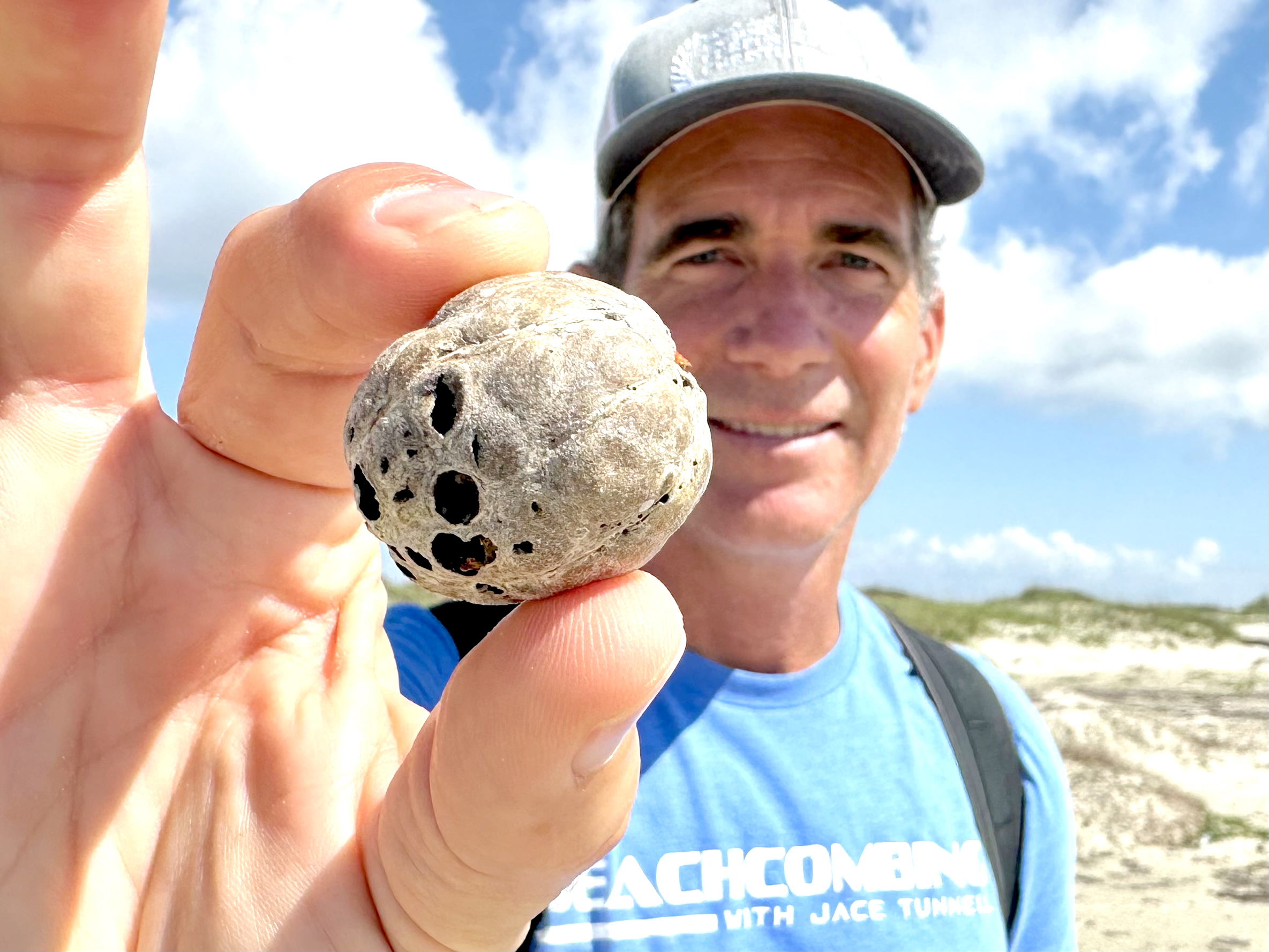
Last week’s beach survey delivered one of the rarest sea bean finds I’ve ever encountered along the Texas coast, two blister pods. I spotted them while riding my e-bike down the beach, scanning the wrack line for the usual drift treasures. At first glance, blister pods don’t look especially remarkable, but once you pick one up and study it closely, they become one of the most fascinating sea beans in the world.
Blister pods come from a tropical tree called Bubblenut (Sacoglottis amazonica), which grows mainly along the floodplains and lower reaches of the Amazon River in South America. The tree produces a woody fruit that eventually falls into the river system and begins an incredible ocean journey. Carried from the Amazon into the Atlantic Ocean, some drift for months or even years before washing ashore on distant beaches, including occasionally here on the Gulf Coast.
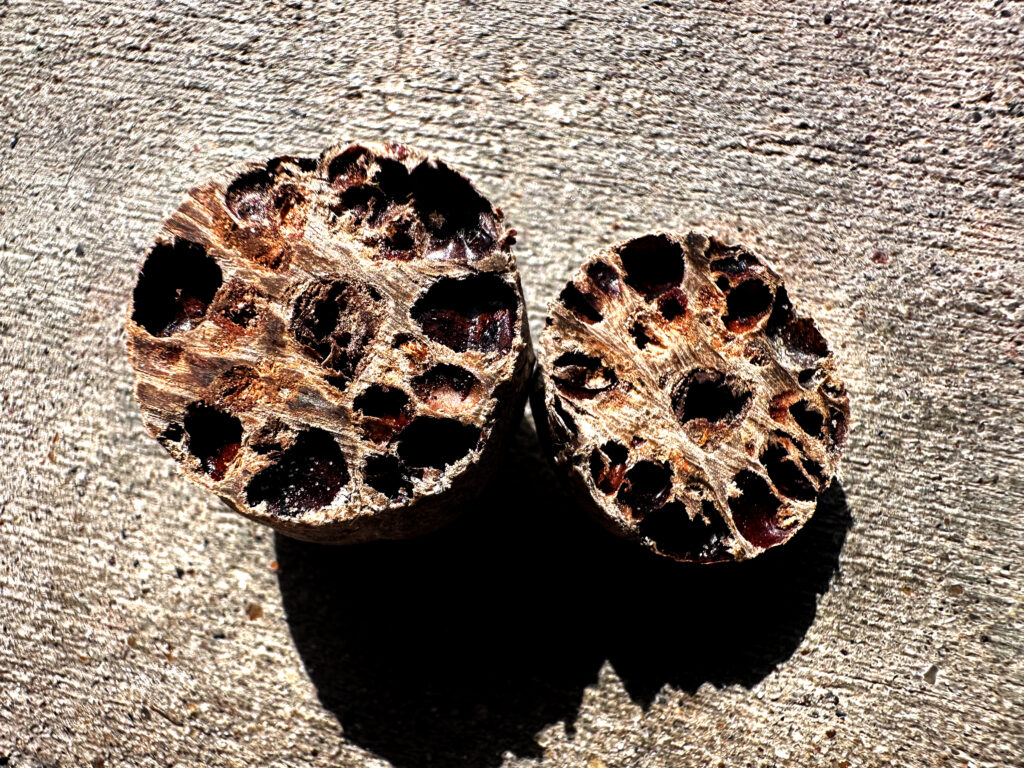
The name “blister pod” comes from its unusual surface texture and interior structure. Curious to see what was inside, I cut one of my finds open. Instead of a solid interior, the pod was filled with strange empty chambers and cavities, almost like a natural sponge or honeycomb. Those hollow pockets likely help the pod float during its long trip across the ocean.
They are much less commonly found than hamburger beans or sea hearts, which makes discovering one especially exciting for beachcombers.
People in parts of South America have reportedly used the wood and oils from related trees for medicinal purposes and construction, although the drifted pods themselves are mostly valued today as curiosities, jewelry pieces, and prized additions to sea bean collections.
After years of beachcombing, it’s still amazing that a seed pod born deep in the Amazon rainforest can end up resting in the sand beneath my bicycle tires on a Texas beach.
Jace Tunnell is the Director of Community Engagement for the Harte Research Institute at Texas A&M University-Corpus Christi. His Beachcombing series appears on YouTube and you can follow Jace at harteresearch.org, or Facebook (facebook.com/harteresearch), Instagram (@harteresearch) and X (@HarteResearch) (the platform formerly known as Twitter).